Don’t try to (needlessly) upsell me.

Writers, Print Vehicle Service Histories for Every Vehicle
read more



Don’t try to (needlessly) upsell me.
In this business, there are a few scenarios that portend a lack of profitability. The bulk of them can usually be attributed to either the shop, the car, or the customer—and all have tells. Are you a writer who can and will size up a car in the lot and the customer at the counter? Do you know your shop’s flaws and weaknesses? If you do, it’s likely you save a lot of bottom-line dollars from going up in smoke. If not, read on for some of those tells the old pros look for. Let’s start with the car.
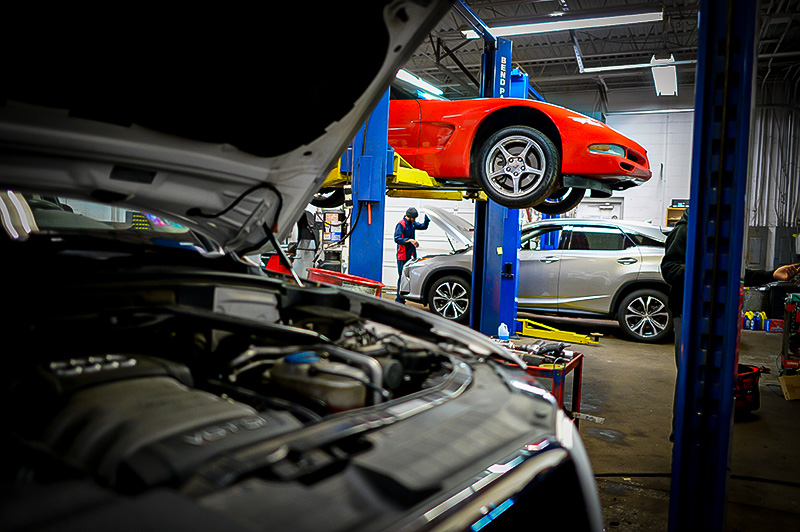
There are a few items about a vehicle that can instantly tip you off to the fact you may need to send a customer to a different facility, write an RO with lots of extra meat on the bone, or simply decline to perform repairs on a given vehicle. Here are a few.
Age: Cars that are very old do have the benefit of having many parts that may be in need of repair or replacement. However, the odds of successfully selling them deteriorate dramatically as the car’s book value plummets. You may spend time writing an estimate that ultimately is very likely to be declined, except for essential repairs—and even those are no guarantee. Add to this that parts can’t be sourced quickly, as they aren’t stocking items for parts houses, and sometimes can’t be sourced at all. Your time going on the hunt and the bay being tied up are hours that can’t be billed. Barring a collectible or classic automobile, old vehicles can be harboring all manner of time-absorbing problems you can’t be compensated for, especially when coupled with the next point.
Condition: A car in poor condition usually indicates an owner who doesn’t value the vehicle highly and doesn’t elect to have shops perform repairs. Consider that a rolling billboard advertising a customer who’s reluctant to spend. If you see a car that’s rusty, that’s a red flag. Rust causes parts to seize in place. Rust makes fasteners snap, round off, and corrode away. Rust is a good indicator that you should mention up front to the owner that book labor times may not be applicable. Other tip-offs are tires of differing brands (indicating they’ve been replaced only at failure or imminent failure, not proactively as a set) and vehicles you can hear coming before you see them from exhausts that have failed and not been repaired. A vehicle in poor shape usually took a while to get there, and during that time, the owner was declining service.
Popularity: Every technician sees ho-hum Camrys and F-150s all day long. The exotic and esoteric, which techs sometimes consider nice to work on just for variety’s sake, are usually hidden time traps. Parts can be more difficult to source due to infrequent demand, yielding fewer options on the market, distribution channels outside the mainstream, and delays in acquiring them since they are not the fast movers that command shelf space. Parts for a Honda Accord are probably on your favorite supplier’s shelf. Parts for a Hyundai Equus are probably not.
Modification: Hot rods are great fun to build and drive, but if you’re not a hi-po shop, modified vehicles may, ironically, slow you down. Every modification on a car is something different. Different service routines that stray from the manual. Different parts to break and replace, and different to assess from stock vehicles.
Was that exhaust noise a leak or a performance pipe? Are those teeth-clickingly firm trips over bumps from blown struts or seriously stiff suspension shod with ultra-low-profile tires? It’s all too often these vehicles aren’t in shape to pass safety inspections if your state has them, and often there are modifications made that might be safe(ish) at the track or strip, but not for street use. Finding, recording, and presenting them to the customer is mandatory, but getting paid for that time is not.
If you don’t specialize in performance vehicles, sidestepping them in favor of more conventional cars can be a smart business move.

Like vehicles, some customers can be a collective drain on your resources. Here are a few markers that can indicate a less-than-ideal customer.
Known decliner: If you have a customer who never accepts your service recommendations, making any isn’t the best use of your time. Maybe you just see the car for oil changes or rotations now and again. If that’s all you’re selling, maybe it makes sense to only try to sell that and spend your shop’s time on customers who can push your ticket average up from the not-even-triple-digits LOF.
Flight risks: Ever get stuck with a car that hangs out a few weeks until you’re paid and the car is gone? Ever store a vehicle after a wreck or during a snowy winter for way longer than you expected? Those customers are usually cognizant of what they are doing—they are flight risks. Especially if you’re writing a big ticket on a vehicle with a modest book value, you have to consider the possibility that your customer may not come to collect—and pay for the repairs on—their vehicle.
Unreasonably high expectations: Have you dealt with the customer who always manages to find a smudge on the carpet or a nick in his wheels that you allegedly caused? Or the customer who insists the vibration “after you worked on it” has nothing to do with the cracked hubcap and bald tires on that side of the car? Everyone has different expectations, but some customers can’t be satisfied. Sometimes this is a borderline scam to get something for nothing, and other times the customer just doesn’t understand what demands are reasonable.
The DIYer: Not all DIY customers are immediate risks, but a class of them can become costly to your operation. A DIY customer with a track car who drops off wheels and tires for mounting every now and again isn’t normally a problem. But the DIY customer who doesn’t want to pay diagnostic fees, wants to ask a stack of questions, and ultimately declines the repair, which they’ll then perform (or attempt to perform) themselves, might not be the customer to spend much time on.
In a hurry: A customer who’s in a hurry even after being told how long a job could take can wreck shop throughput. Constant trips up to the counter or calls to check on progress make you no money but do burn up time in the day. If the pressure escalates, you might be tempted to pivot to get this “squeaky wheel” out, shortchanging more patient customers, which is obviously not fair to them. The customer’s time is indeed valuable—but so is your shop’s.

Shops themselves have characteristics that can make a job unprofitable through no fault of the car or customer.
Wrong tools for the job: If your shop has one-post, in-ground lifts and you take on a RWD transmission swap, it’s gonna be a tough row to hoe for the tech in that bay. Similarly, if your shop is geared towards bending custom exhaust systems and you accept a ton of heavy driveability diag work, you might be taxing your techs while at the same time opening the door to misdiagnosed parts dragging down RO profitability.
Seemingly inconsequential things like how far the towed vehicle landing area is from the shop door, whether the tool truck shows up same day if tools are required, or if the not-so-local dealership delivers your parts or expects you to pick ‘em up can all be the difference of a given job being a blessing or a curse.
Programming time: In recent years, an amount of time spent with the scanner but not diagnosing has cropped up. Programming module characteristics, accessing diagnostics through secure gateways, and updating software all take time (and usually a very expensive scan tool). If this work isn’t one of your techs’ superpowers or you can’t reliably sell the time upfront that it takes to perform these necessary tasks, you’re going to erode profitability. No one likes sending a customer to the dealer, but in many instances, that’s the best move for your shop, your customer, and the dealership.
Not taking on a job is never the first thing that comes to mind when sales figures and bonuses are on the line, but protecting your shop’s time—and thus your earning potential on a minute-by-minute basis—can be the right move. It’s not always intuitive at first, but if you make an effort to keep margin and profitability on your mind, it’ll soon be second nature.
The articles and other content contained on this site may contain links to third party websites. By clicking them, you consent to Dorman’s Website Use Agreement.
Don’t try to (needlessly) upsell me.

Techs can’t solve the problem that can’t be found
“Drive it ‘til the wheels fall off” isn’t the safest decision. So when does it end?

Don’t leave alternative vehicles on the sidelines.

Using your shop’s Cost of Doing Business (CODB) as a baseline for labor rates.
Learn why it’s not a bad idea to charge a little more for the hassle.
Participation in this forum is subject to Dorman’s Website Terms & Conditions. Please read our Comment Policy before commenting.