Customers don’t realize it needs attention. Sadly, many mechanics don’t, either.
The Most Neglected Part of the Cooling System
read more


Customers don’t realize it needs attention. Sadly, many mechanics don’t, either.
Today’s piece starts with a one-question quiz that’s not a trick question: in your shop, what is your best diagnostic tool?
It’s not a meter or a scan tool or a stethoscope, though those all are handy items to have nearby. It’s your technician. And as much as leaving those tools unused in a toolbox is a great mistake, leaving a technician in a bay can be one, too.
Normally, writers, you’re like the offensive line of a football team. You’re pass-blocking: tying up defenders (customers) so your backs (techs) can put points on the board (dollars in the till). But occasionally, just as a quarterback comes out of the pocket for a bootleg, you need to call an audible and facilitate some customer-tech interaction.

Photo: Mike Apice.
Techs should be driving vehicles before and after service—even for most minor jobs. On the initial trip, techs need to verify the problem the customer has mentioned at the counter. Our words are often different than theirs! It’s also a wonderful way to catch a related (or unrelated) problem that a motorist has grown used to; a fresh set of eyes and ears is often just what’s required to fatten up a ticket and catch a very real problem.
But there are two situations specifically where that test drive doesn’t always work well. The first is on a well-worn automobile. Sometimes “clunk from front” makes a tech scratch their head and say, “Well, heck, which one? I can hear a sway bar link clanging, a CV axle clicking, and a ball joint knocking.” On a vehicle with diminished value, the customer may not be interested in fixing every problem, so it’s important we know exactly the one that’s causing the customer concern.
Photo: Mike Apice.
The second situation is when a customer has an intermittent problem that is not easily reproduced by a technician. Savvy customers, though, can often “make the car do it.”
As a tech, I can tell you that’s a golden opportunity to save time. As a writer, I can tell you there’s only one chance to take advantage of that opportunity, and that is when you have a broken vehicle, a customer, and a technician all in the same spot, which is when the vehicle is being dropped off for service.
Your ears should be pinned if you hear a customer mentioning either a very specific set of criteria to reproduce a problem, or if a customer is describing a noise in terms that are nebulous. “The engine suddenly sounded really loud as soon as I turned on the car” is likely an exhaust problem and very definite. “Sometimes there’s a swishing noise” could be a tire rubbing a fender liner, a leak in a heater core, or an animal that’s made an automobile home. If further probing doesn’t get you locked in on some likely causes, read the D and call an audible from the line, so to speak.
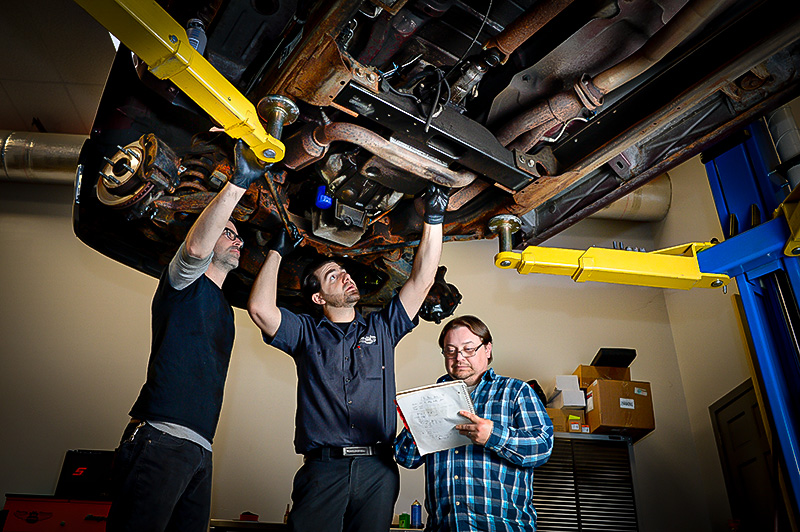
Photo: Mike Apice.
Obviously, pairing techs and customers works better with certain personalities, but yelling out to the guy in the bay, “Hey Jimmy, I’ve got a customer out here with an intermittent problem coming your way, do you have time to take a ride real quick?” can be a lifesaver. If the tech turns that ride down, then the onus is on him to perform the repair correctly.
But we’ll always make time. What tech would turn down the opportunity to have the person who knows the vehicle best take them on a guided tour of the problem? Try it out. Get your techs out of the bay and into a car. It helps them diag faster, and it helps customers understand that sniffing out problems and repairing them correctly is a more delicate process than just plugging in a scan tool.
Use the tools at your disposal, and don’t forget where your greatest diag tool is stored—right between your best tech’s ears.
The articles and other content contained on this site may contain links to third party websites. By clicking them, you consent to Dorman’s Website Use Agreement.
Customers don’t realize it needs attention. Sadly, many mechanics don’t, either.
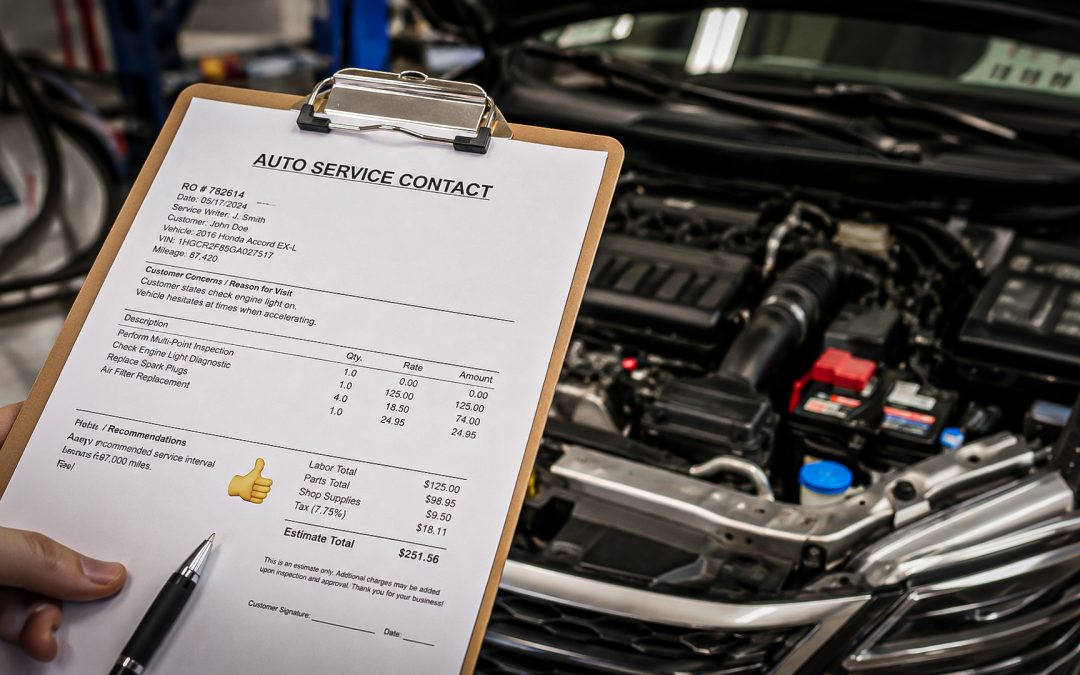
Casual communication can have formal consequences.
If you have to have them in the shop, endeavor to make politics polite.
Real estate is an investment—make yours start earnin’.

Don’t try to (needlessly) upsell me.
“Drive it ‘til the wheels fall off” isn’t the safest decision. So when does it end?
Participation in this forum is subject to Dorman’s Website Terms & Conditions. Please read our Comment Policy before commenting.