Shop Press

Shop Press is the news and idea hub for everything related to working on cars and trucks, focusing on repair, technology, and wrenching lifestyle.

From the creative minds at:

FEATURE STORY

Hot Off the Press

Coolant Service – ASE Practice Question (VIDEO)

Description Technician A and Technician B are discussing proper cooling system maintenance. Technician A says that time and mileage should be considered but are not the only factors to consider when recommending a cooling system service to a customer. Technician B...

What are Frits? (And Why Does Almost Every Car Have Them?)

It’s a pretty safe bet that most younger techs haven’t heard of frits before. Not one single customer, ever, has come into your shop looking for some help with a frit problem. So while this article won’t help you turn bays faster or improve your diagnostic skills,...

Cat DTC Diagnosis (P0420) – ASE Practice Question (VIDEO)

Description Technician A and Technician B are discussing the troubleshooting procedure for a P0420 (Catalyst Efficiency Below Threshold) DTC. Technician A says that the presence of any other codes should be considered first before replacing the converter. Technician B...

What Shape Is a Piston?

At this late date, if you work in a standard automotive facility servicing late-model vehicles, it’s probably infrequently you even see—let alone think about—pistons. However, if you are in a rebuild shop, a race environment, or the antique space, seeing a set of...

Cabin Filters – ASE Practice Question (VIDEO)

Description Technician A says that cabin air filters protect the occupants from over 200 known contaminants found in a typical car’s passenger compartment. Technician B says that the cabin air filter protects the evaporator core from copper particles emitted by the...

Should You Replace That Damaged Plastic Intake Manifold?

It seems like plastic is everywhere under the hood of a modern car. You even have to remove a plastic cover to find the engine! But plastic and composite parts like distributor caps and ignition coil housings have been in use for over 100 years. In the 1970s,...

Politics Ain’t Politic

Red, blue, or green? You’ve pieced together the point of this article by now, no doubt. This will not be a piece that risks raising the hackles of those who are deeply political. That’s not because you’re encouraged to avoid the topic, but instead, to do what makes...

PSA: The Right (and Wrong) Ways to Handle Iridium Spark Plugs

by | Feb 24, 2026

For the vast majority of vehicles on the road, swapping out spark plugs is gravy work. Yoink the old plugs, make sure the replacements meet the necessary gap spec, install the new plugs, and button up the ignition system. You’re in and out of there in no time, right?

That may have been acceptable back in the days when practically every vehicle used good ol’ copper core plugs that didn’t care too much about how they were handled or adjusted. Accidentally set the gap a few thousandths off? No biggie, just bend the strap again and verify with your gauge. Easy peasy.

But new techs and DIYers alike should know that the game has changed. Those old methods can create new problems in a hurry, leading to comebacks, driveability issues, and other headaches. And it all comes down to one of the rarest metals on Earth: iridium. Ironically, it’s also one of the most common core materials found in modern spark plugs.
CanAm
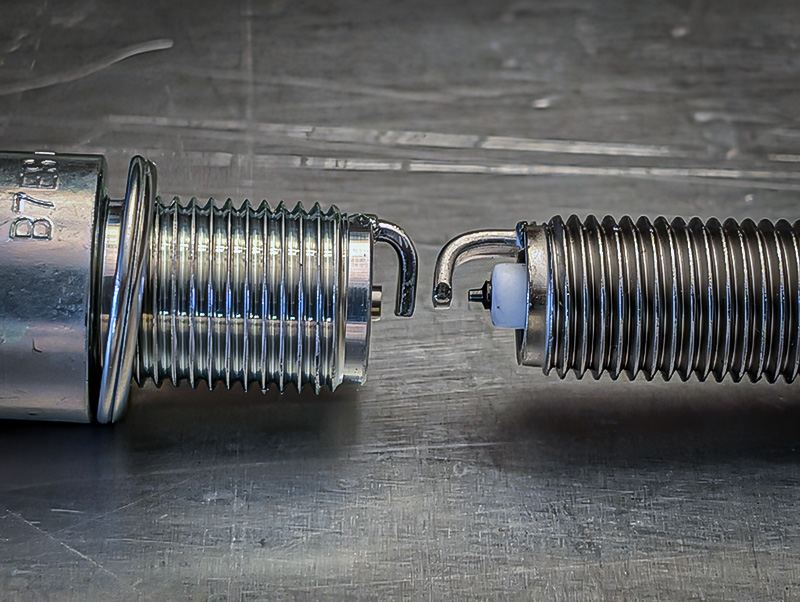
A copper core plug (left) and iridium core plug (right). Note the fine electrode tip on the iridium plug. Photo: Andy Greaser.

While manufacturers spec spark plugs with iridium cores for a few reasons, they are broadly used to squeeze performance out of optimized engine designs, often supporting additional technologies like forced induction, direct injection, and sophisticated ignition systems. So don’t be surprised when you see one, and definitely do not make any of the following rookie mistakes:
  • Don’t touch the electrode. Iridium is brittle, and it doesn’t take much to ruin an electrode.
  • Don’t gap iridium plugs. They are preset at the factory. Simply order the correct plugs from the get-go, and you won’t need to touch your gauge set.
  • Install iridium plugs with care. That goes double for modern engine designs that position the plug deep in the engine to accommodate direct injection. Dropping a plug down a spark plug well can damage the electrode, and if you install that plug, the vehicle may exhibit ignition issues.
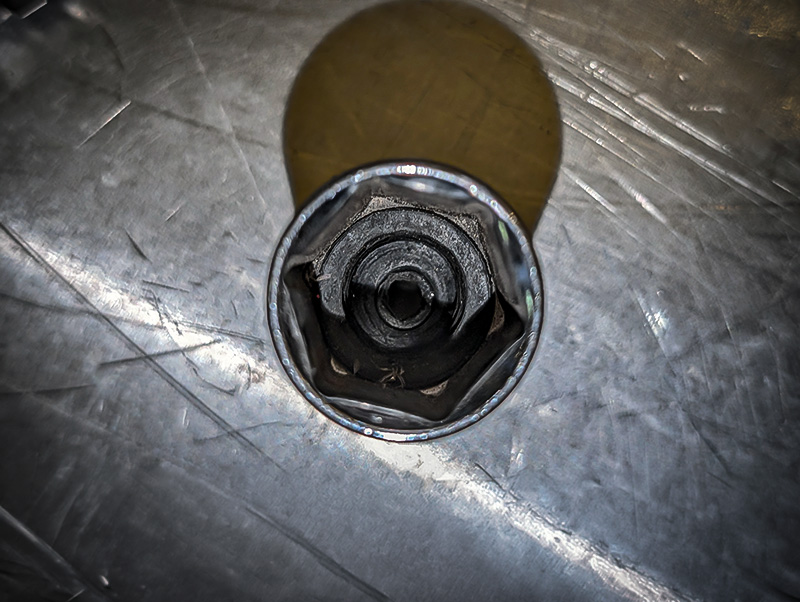
  • Related to the point above: make sure your spark plug sockets are in good condition. Most spark plug sockets will have a little rubber ring inside to help hold the plug as you install it. If that donut is worn out or missing, you’ll run the risk of dropping the plug mid-install.
  • It is possible to clean deposits off of iridium plugs, but only a soft brush and isopropyl alcohol should be used. Don’t reach for your wire brush, and absolutely do not use any abrasives. Heavy deposits on a fresh plug requires diagnostic work, or the deposits will probably return quickly.
CanAm
That rubber ring down in the bottom of a spark plug socket helps to secure the plug as you install it. Make sure it isn’t missing or worn out. Photo: Andy Greaser.
So next time you’ve got a spark plug job on your hands, take a peek at the electrode to see if it has the distinctive fine tip of an iridium core poking out. That’s your cue to work carefully and follow the tips above for a successful job.

The articles and other content contained on this site may contain links to third party websites. By clicking them, you consent to Dorman’s Website Use Agreement.

Related Articles

Shop Press Comment Policy

Participation in this forum is subject to Dorman’s Website Terms & Conditions. Please read our Comment Policy before commenting.

Subscribe
Notify of
guest
0 Comments
Newest
Oldest Most Voted
Inline feedback
View all comments