Customers don’t realize it needs attention. Sadly, many mechanics don’t, either.
The Most Neglected Part of the Cooling System
read more



Customers don’t realize it needs attention. Sadly, many mechanics don’t, either.
The SAE connector is instantly recognizable to many technicians. Commonly found on electrical junctions that need the ability to be disconnected often but ought not be reversed, the plug seems like it should be a no-brainer—however, it’s anything but. If the picture you see there doesn’t ring a bell, the SAE lead is usually seen on battery maintainers. These connectors are sometimes used for quick hookups in low-stress environments where speed trumps ruggedness, like heated seat warmers and through-the-cigarette-plug accessories like battery memory savers. If you’ve ever seen a trailer flat-four connector, the SAE lead is effectively a two-pin version of that.
The SAE lead is most often seen in a basic plus-and-minus setup. The connector oddly has no formal standards. It cribs heavily from J1239 and J928 SAE standards, but is governed by neither. And lately, the weird spawn of both, the SAE connector, has become unwittingly dangerous.
In its most common format, it seems like it should be safe: on power supply sides, the hot side of the terminal is shielded to prevent contact with the frame. On items that receive power, the hot side is bare, which shouldn’t matter, just like any standard household electrical device.
Here’s where you need to be vigilant: an onslaught of dangerous connectors, polarity reversers, and extension cables are not just available but often shipping with electrical components that can cause injury and damage—and if you’re not paying attention, simply unplugging them can make YOU the cause. There are three “gotchas” to be aware of when working with these accessories if they’re installed on a customer car.
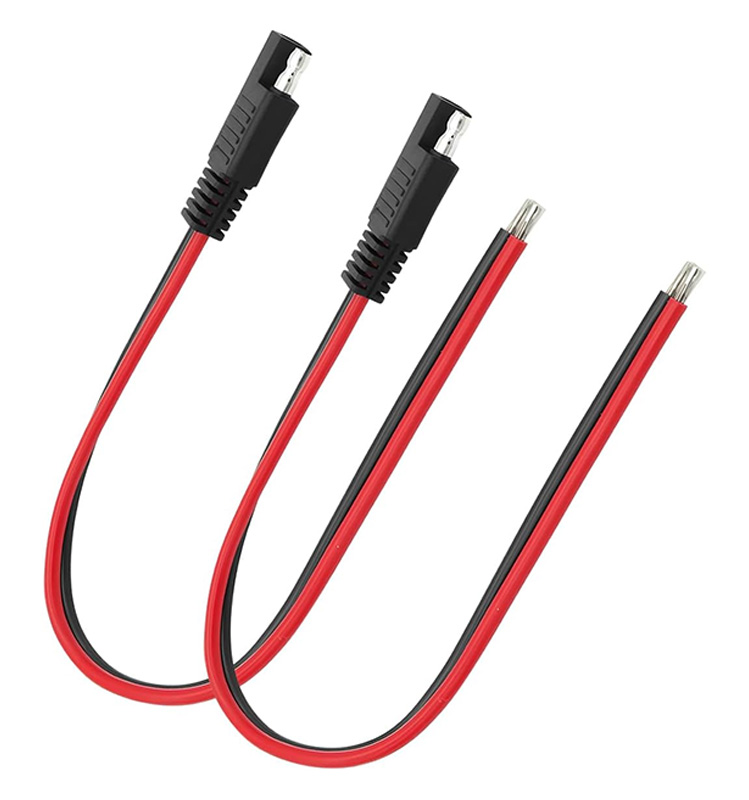
The first issue is the extension cable’s reversal of polarity, leading to an exposed hot. If the cable is extended with a cable between the load and the power source, a break at the extension cable’s junction with the exposed hot pin is almost certain to short against a chassis, following the path back to ground. This is the reason that most of the time, items that give power are female and items that use power are male. This goes for polarity reversers, too—unplug it in the wrong order, and you’ve got a fuse-blower in your hand. A less-dangerous but annoying consequence can be the blowing of the fuse. Since these are often fused separately, you may not notice the fuse you’ve blown, or if a fused lead is receiving power from another fused circuit, you may have to go on a little hunt to find where your break actually is since there’s no standard on wire gauge or ampacity.
And on the odd positive-ground vehicle? The waters get muddier yet. Antique vehicles and tractors, which may go for long periods unused, are usually the first candidates for battery minders. But how do you wire it? Red to positive, which then leaves the negative part of the lead unshrouded? Or the safe way, shrouded positive, but now with the colors reversed? You have to look to see what you have in your hand. Which brings up the second problem.
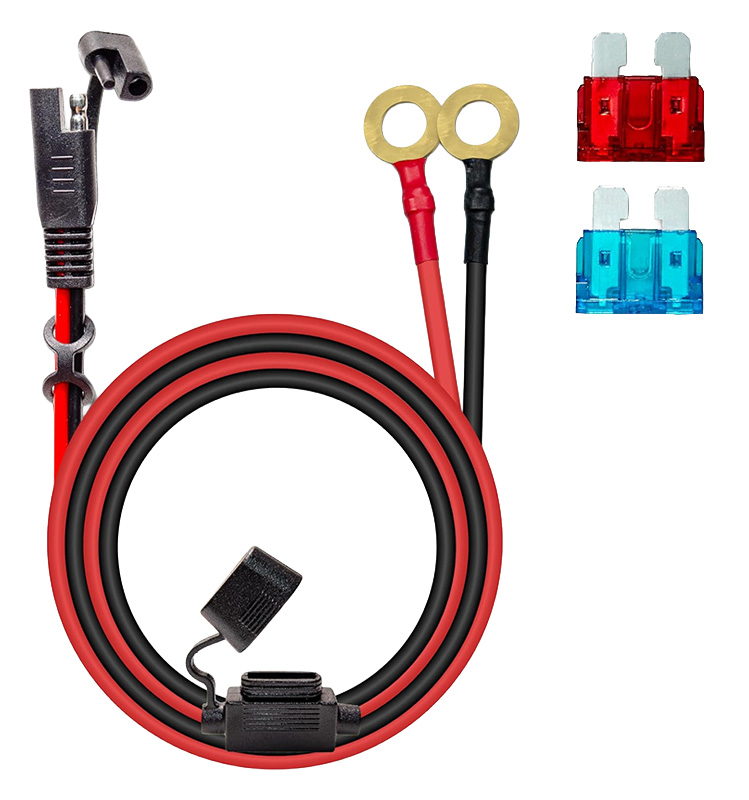
The second huge problem is the color coding. In addition to the admittedly-uncommon reverse polarity vehicle above, there’s a far more prevalent issue. Often the hot and negative wires are color-coded, which is usually helpful. Especially considering the very basic connections these cables support, you’d think this would be a step towards safety.
However, when multiple connections are used, it’s possible for the colors to get turned around depending on which end of the cable gets connected. The cable can be installed with the colors inverted so it’s still functional. On the flip side of things, it’s possible to blindly match up colors and end up with an easy way to create a short because the polarity may have reversed, but the wiring jacket color did not.
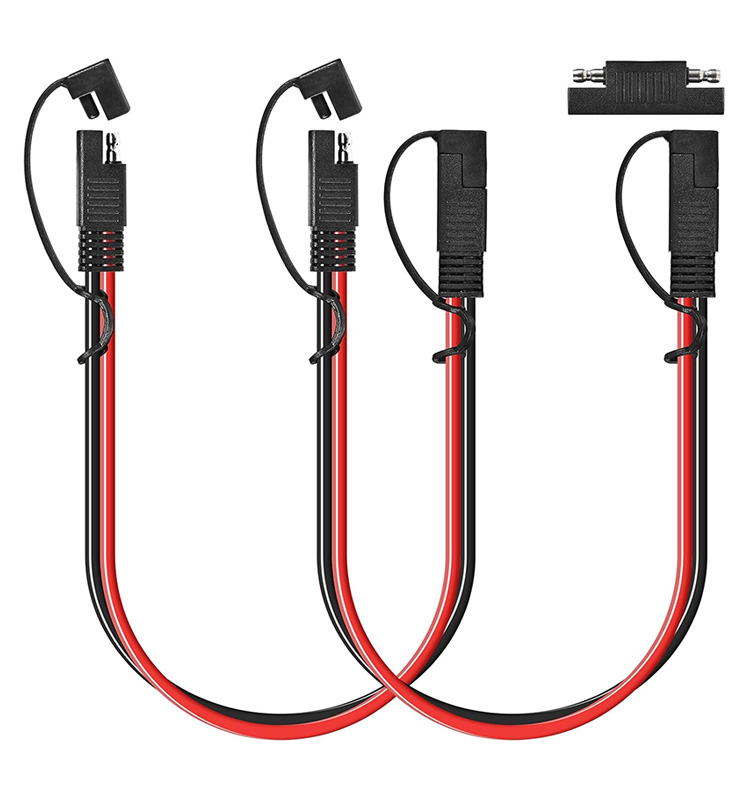
The final issue with the SAE format is a general one that’s usually not too problematic, but gets exacerbated with extension cables: the load. These cables are often made with small-gauge wire and modest insulation. Fuses are often inadequate or nonexistent, and because there is no real standard for this connector type, it’s the Wild West out there as far as how much load they’ll support. Many unscrupulous sellers use the thinnest aluminum wire that will carry current over runs that are so long it’ll give you heartburn (and maybe a real burn) just looking at the things—with nary a fuse in sight.
Adding an extension just adds to the problem. There are few DIY home-gamers consulting wiring gauge run charts and even fewer who can calculate the load moving through a circuit and adding an acceptable safety margin. It’s not uncommon to grab one of these in service and feel the heat caused by the excess resistance.
There’s no avoiding these connections, that’s for sure. But there are intelligent and not-so-bright ways to handle them. If you need to connect or disconnect a snarl of wires connected by way of the SAE connector, pulling some fuses, disconnecting at the power source, and paying attention when disconnecting and reconnecting them, though seemingly overly safe, might just make your day go a bit smoother.
The articles and other content contained on this site may contain links to third party websites. By clicking them, you consent to Dorman’s Website Use Agreement.
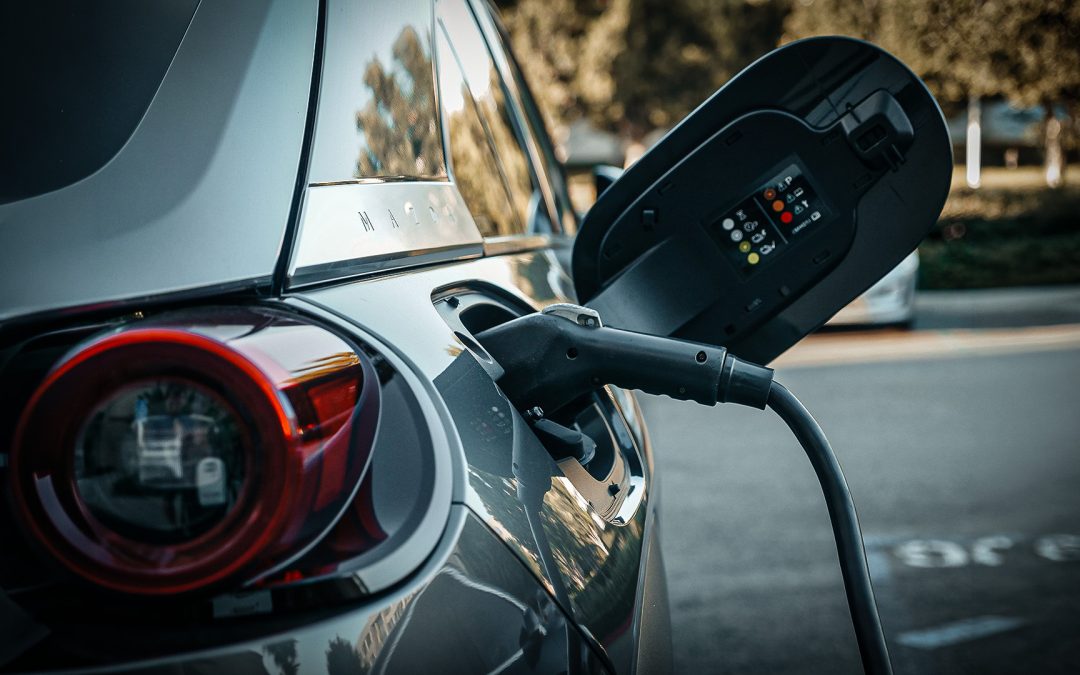
If it ain’t broke, don’t try to fix it.
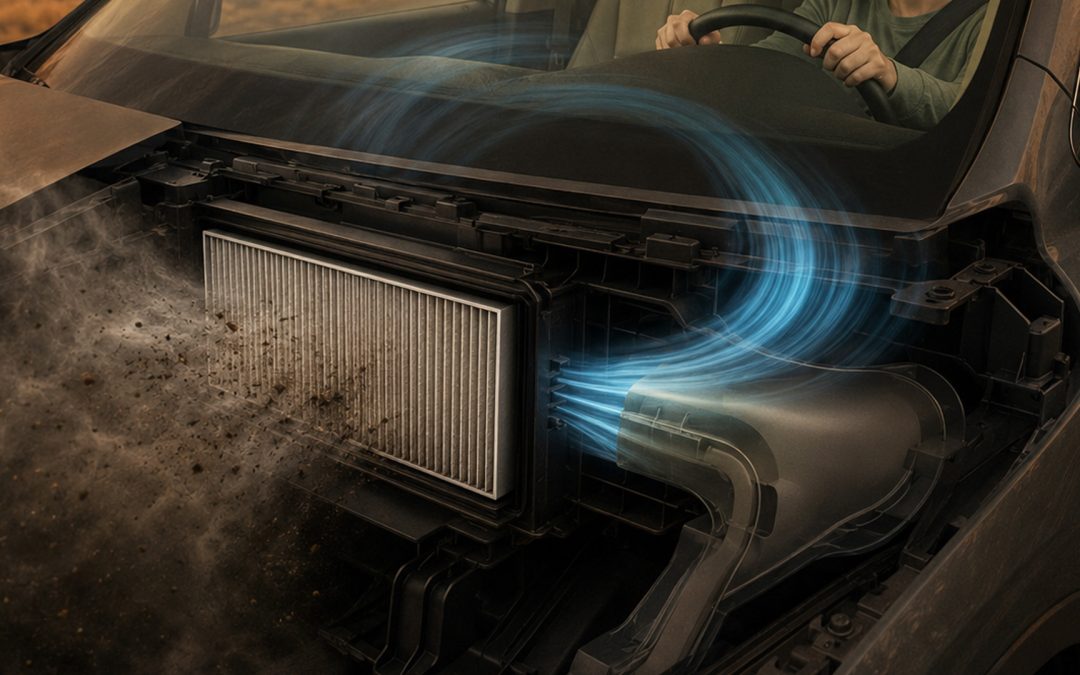
Can a vehicle’s air filtration help keep you safe from wildfire smoke and poor air quality?

The 454 SS combines the time capsule looks of the GM GMT400 platform with an entertaining drive that harkens back to the muscle car heyday.

Spoiler alert: yes!

Pocket check!
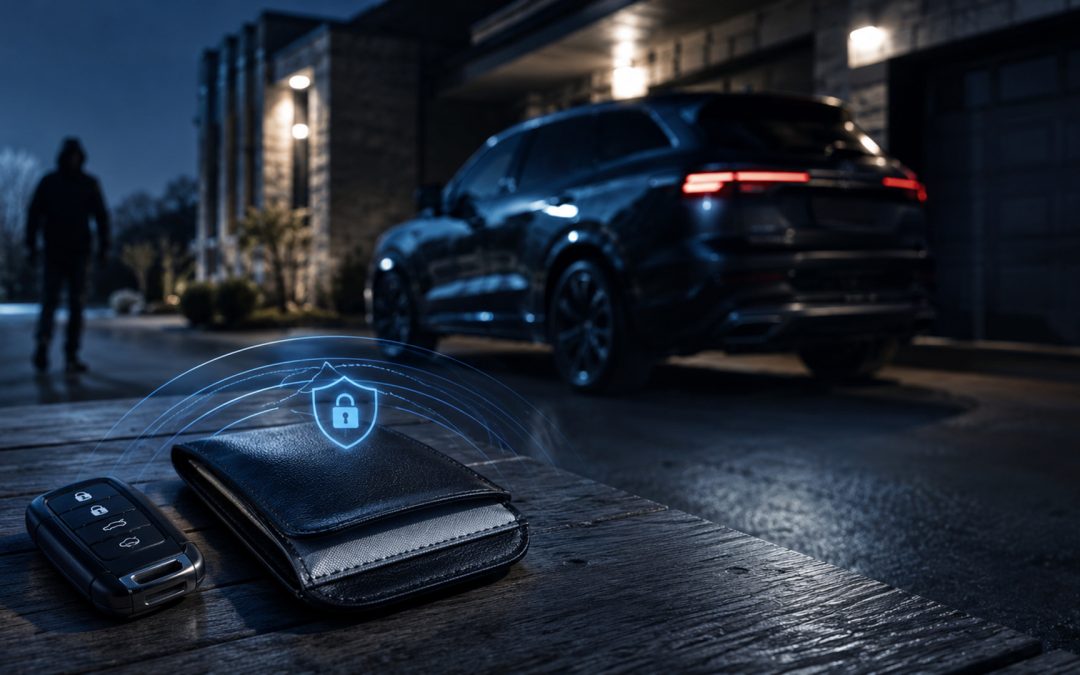
Car thieves are getting smart. You need to be smarter.
Participation in this forum is subject to Dorman’s Website Terms & Conditions. Please read our Comment Policy before commenting.