Don’t try to (needlessly) upsell me.

Writers, Print Vehicle Service Histories for Every Vehicle
read more



Don’t try to (needlessly) upsell me.
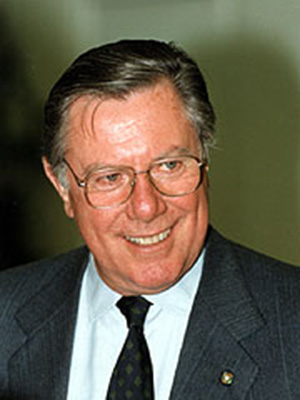
Sergio Pininfarina in the 2000s. Photo: senato.it, CC BY 3.0 IT, via Wikimedia Commons.
Born in Turin, Italy in 1926, Sergio Pininfarina was destined for design greatness. His father, Battista “Pinin” Farina, founded coach building and design company Pininfarina S.p.A. in 1930, and Sergio absorbed the craft of form, proportion, and emotion from an early age. After earning a mechanical engineering degree from the Polytechnic University of Turin, Sergio joined the family firm in 1950.
He brought with him a rare blend of technical acumen and aesthetic intuition. To Sergio, a car was not just a machine—it was a living sculpture meant to stir the soul. He famously said, “The beauty of a car must last as long as the car itself.” That philosophy guided his approach: clean lines, aerodynamic efficiency, and a balance between performance and grace.
When Pininfarina began collaborating with Enzo Ferrari in the early 1950s, the result was nothing less than magic. What began as a business partnership evolved into a creative symbiosis that lasted more than 60 years.
Enzo Ferrari once said, “Pininfarina creates the clothes for my engines.” Under Sergio’s direction, those “clothes” became some of the most recognizable silhouettes in automotive history.
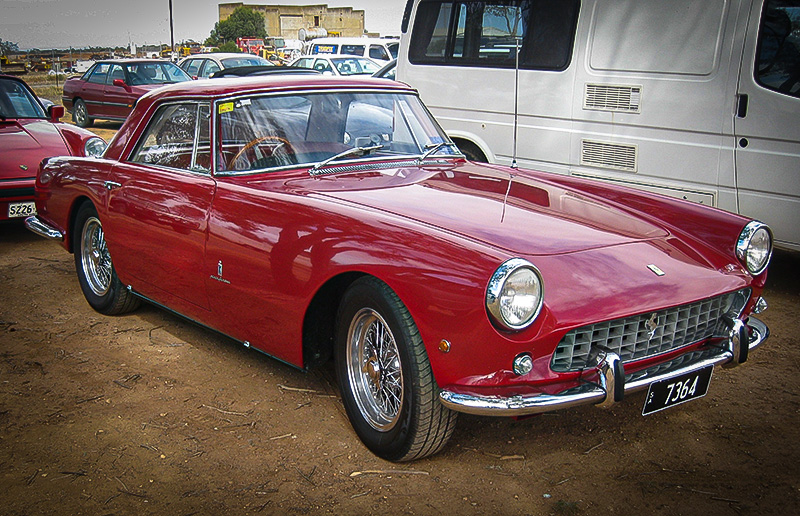
Ferrari 250 GT Coupe. Source: GTHO, CC BY-SA 3.0, via Wikimedia Commons.
Topping that list is the 250 GT, an iconic car that established Ferrari’s grand touring formula and its foothold as a road-going automobile manufacturer. With its long hood, short rear deck, and restrained detailing, the 250 GT became a benchmark for balance and proportion. Early models like the 250 Europa GT and 250 GT Boano (1953) emphasized elegant styling and road manners, using Colombo-designed V12 engines paired with lightweight chassis construction. These cars bridged the gap between competition and comfort, establishing the formula that would define Ferrari’s road cars for years to come. The 250 GT Berlinetta (1956) “Tour de France” refined that balance further, combining sleek coachwork brought to life by Scaglietti with genuine race-winning capability—capturing victories in the Tour de France Automobile multiple times and cementing Ferrari’s dominance on both road and track.
Later iterations of the line, such as the 250 GT California Spyder (1957), SWB (Short Wheelbase) Berlinetta Passo Corto (1959), and 250 GTE 2+2 (1960), reflected the growing diversity of Ferrari’s clientele and engineering ambition. The California Spyder brought open-air glamour to the series, while the SWB offered improved handling and compact proportions ideal for endurance racing. The 250 GTE, Ferrari’s first true four-seat GT, demonstrated the company’s move toward broader appeal without abandoning performance. This also expanded Pininfarina’s design influence across a wider range of vehicles, appealing to different buyers and philosophies of use.
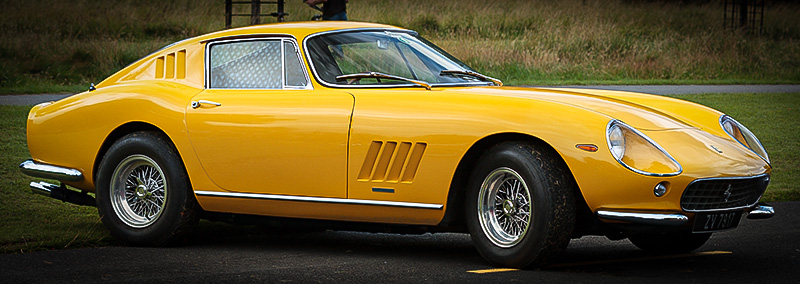
1965 Ferrari 275 GTB. Photo: Sean Rozekrans, CC BY 2.0, via Wikimedia Commons.
The 275 GTB refined the 250’s concept with a sleeker shape, a rear-mounted transaxle, and independent rear suspension for improved balance. The car also sported four-wheel disc brakes, a first for a road-going Ferrari and a welcome improvement in stopping power considering the car’s 160 mph terminal velocity. Its 3.3-liter V12 delivered about 240 horsepower. The combination of refined handling and understated style made it one of Pininfarina’s most admired works. Introductory models were known as ‘short nose’ while 1965-and-later models were dubbed ‘long nose’ as their stretched noses were designed to aerodynamically reduce lift at higher speeds.
In 1966, the line evolved into the 275 GTB/4. The headlining technological advancement was the introduction of a four-cam version of the Colombo V12 engine, delivering 300 horsepower and featuring dry-sump lubrication. Retaining the elegant long-nose body style, the GTB/4 incorporated refinements to both the chassis and interior, improving its handling and comfort. Offered with an optional aluminum body, this model could accelerate from 0 to 60 mph in 5.5 seconds and reach a top speed of 165 mph. Tallying up all the variants, 970 examples of the 275 were produced.
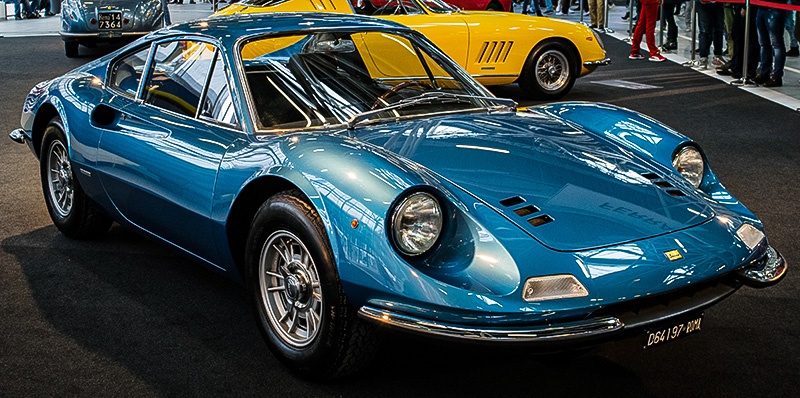
Sergio played a pivotal role in the creation of the Ferrari Dino, personally convincing Enzo Ferrari to pursue a mid-engine design and entrusting Pininfarina with crafting its bodywork. He was instrumental in developing the 1965 Dino Berlinetta Speciale concept, which set the foundation for the styling that would define the production versions that followed.
Thanks to its mid-engine configuration, the Dino had long flowing lines, a low silhouette, and the look of Ferrari race cars of the day. The car was named after Enzo’s son, Alfredo “Dino” Ferrari, who died at a young age but played a key role in the design of the V6 engine used in the car. Enzo created the Dino line of sports cars, initially not badged as Ferraris, to honor his son and to produce more accessible cars with the V6 engine he helped develop. In fact, the script on the Dino badge was based on Alfredo’s signature.
The Dino’s 2.0- and later 2.4-liter V6 engines produced up to 195 horsepower. Light and agile, the Dino emphasized balance and precision over brute force, showcasing Pininfarina’s belief in harmony between aesthetics and dynamics.
The car was initially met with an identity crisis as its position as a “true Ferrari” was hotly debated. Purists argued the car wasn’t badged as a Ferrari or sold as a Ferrari because it didn’t have a V12, and the engine it did have was mounted amidships. However, the decision to separate the Dino line was made well before the uproar.
As the years passed, the debate over the Dino’s true provenance faded. Celebrated for its stunning Pininfarina styling, outstanding handling, and significance as Ferrari’s first production mid-engine road car, the Dino is now regarded as a timeless classic, highly prized by collectors and commanding six-figure prices. Combining 206 and 246 variants, Dino production stands at 3,721.
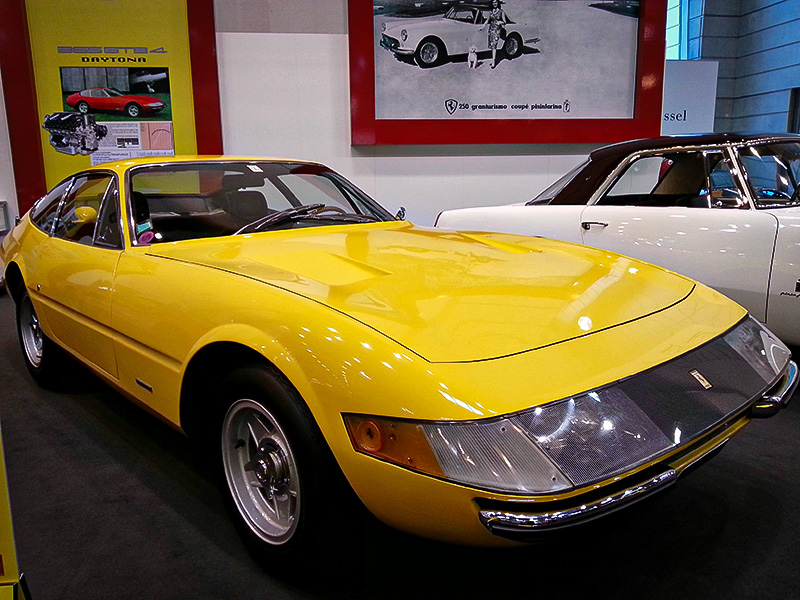
Ferrari 365 GTB/4. Photo: PeterHoch, CC BY-SA 4.0, via Wikimedia Commons.
The Daytona marked Ferrari’s transition into a more angular, modern design language. Its 4.4-liter V12 produced 352 horsepower, giving it a top speed of 174 mph, positioning it among the fastest cars in the world at the time. And Pininfarina made sure that it looked the part.
As head of Pininfarina, Sergio guided the studio’s creative direction and upheld its close partnership with Ferrari, while newly appointed head designer Leonardo Fioravanti led the project’s day-to-day design work. The GTB/4 coupe was produced until 1973, with a total of 1,284 units built. Its convertible counterpart, the GTS/4 Spyder, was manufactured from 1971 to 1973, with only 122 examples made. There were other variants, including a 2+2 and a Boxer. Total 365 production checks in at 2,486 units.
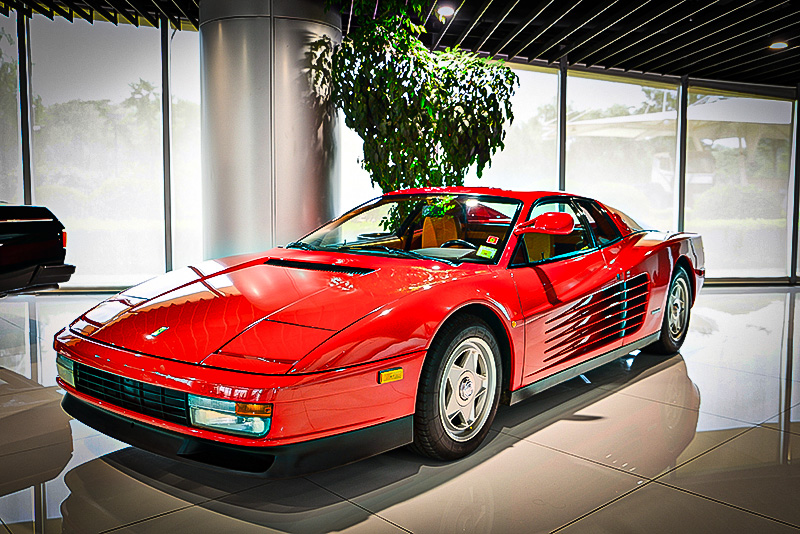
Ferrari Testarossa. Photo: emperornie, CC BY-SA 2.0, via Wikimedia Commons.
The Testarossa, named after Ferrari race cars from the 1950s, brought a dramatic change to Ferrari’s visual language as Pininfarina and Fioravanti teamed up to create the car’s wide rear haunches and signature side strakes. With a 4.9-liter flat-12 producing 390 horsepower nestled behind the seats, the Testarossa brought a top speed of 180 mph to the party.
The design combined visual boldness with real aerodynamic purpose, defining Ferrari’s image through the 1980s with an alley-oop assist from the Miami Vice TV show. Ferrari had produced 7,177 examples of the Testarossa when it ceased production in 1991. But those angular lines that Carrozzeria Pininfarina brought to life lived on in the 512 TR and F512 M.
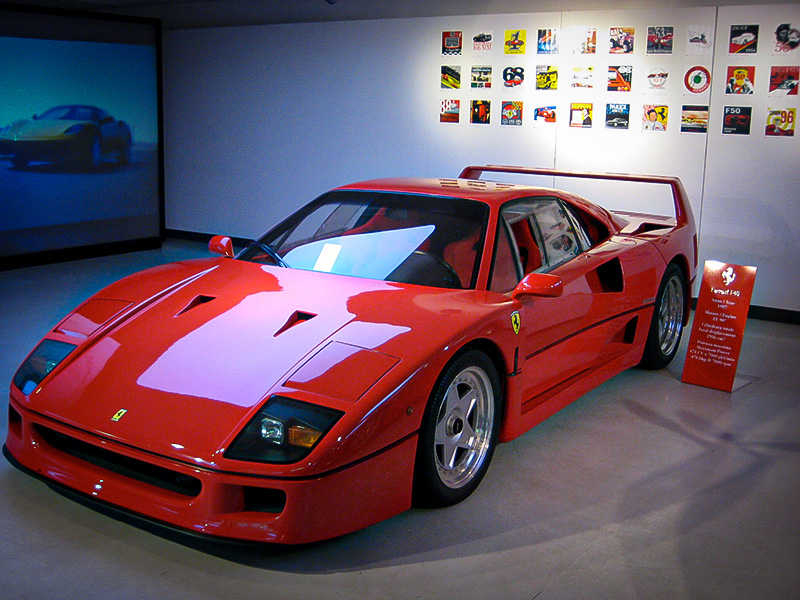
Ferrari F40. Photo: User Adriano on it.wikipedia, CC BY-SA 3.0, via Wikimedia Commons.
Truly designed for speed, the F40 emphasized function over ornamentation. Its twin-turbocharged 2.9-liter V8 made 478 horsepower, pushing the car beyond 200 mph, the first production car to do so. Expanding on concepts established by Pininfarina and Fioravanti in the Testarossa, the angular shape of the F40’s body emphasized aerodynamics and downforce. The design’s extensive use of carbon fiber further demonstrated the car’s devotion to speed. The F40 was built to celebrate Ferrari’s 40th anniversary and was also the last Ferrari personally overseen by Enzo before his death in 1988. As production came to a close in 1992, the F40, which was only expected to encompass 400 examples, boasted 1,315 units of total output.
Thanks for reading Part 1! Stay tuned for Part 2.
The articles and other content contained on this site may contain links to third party websites. By clicking them, you consent to Dorman’s Website Use Agreement.
A nationwide framework of safety regulations has transformed vehicle design and saved countless lives since its introduction in 1968.
The Japanese Domestic Market performance car you’ve waited 25 years to drive is finally ready for legal export.
Did you know that fuel blends change with the seasons in the United States?
How a visionary engineer shaped everything from early EVs to the world’s most iconic sports cars.
Cars have a backup cooling system—use it when the situation demands!
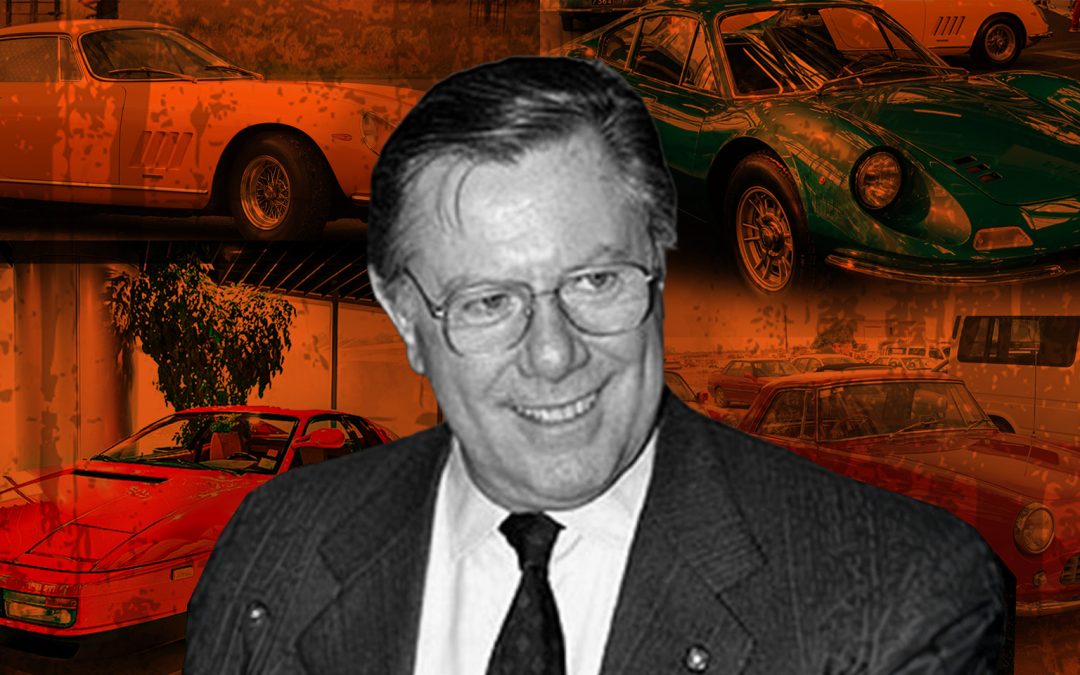
Tracking Pininfarina’s career from the beginning to 1987.
Participation in this forum is subject to Dorman’s Website Terms & Conditions. Please read our Comment Policy before commenting.