Don’t try to (needlessly) upsell me.

Writers, Print Vehicle Service Histories for Every Vehicle
read more



Don’t try to (needlessly) upsell me.
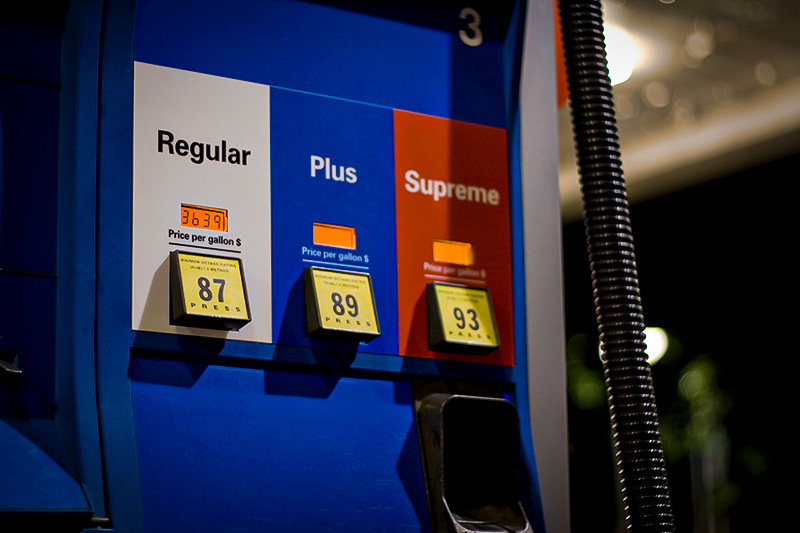
You’d expect that all pump gasoline sold in the United States to be basically the same all year round. We know that octane levels, ethanol content, and additive packages can vary, but beyond that, gas is gas, right? At one time, that may have been the case, but adjusting fuel blends with the seasons has enough of an impact that the Environmental Protection Agency annually oversees shifts in seasonal gasoline blends across the U.S. (This is in addition to, and partially related to, its oversight on ethanol content limits.)
The EPA’s different blend guidelines are intended to support performance, emissions control, and regulatory compliance. Seasonal EPA adjustments balance emissions and environmental protection with vehicle driveability across broad changes in temperature and dense population centers. That said, not all states and regions are subject to requirements for blended (“reformulated”) gasoline. Major regions include eastern Texas, southern Arizona, northern Colorado, the Chicago metro area, and much of the Atlantic coastal region from Virginia up to New Hampshire. All of California uses reformulated gasoline blends, and the California Air Resources Board has its own requirements in addition to the EPA’s limits.
Blend changes primarily affect volatility, which measures how readily the fuel vapors evaporate into a state that is ideal for combustion. Petrochemical engineers quantify this using a metric called Reid Vapor Pressure (RVP). In summer months, gasoline evaporates easily because of the warmer ambient temperatures. That’s why we use summer blends with low RVP values: the gasoline doesn’t need any help evaporating, and too much evaporation can lead to smog and poor air quality if the vapors escape the fuel system. Conversely, in the winter months, the EPA specifies gasoline with higher RVP values to help vehicles start reliably and run efficiently. Basically, winter gas “lights off” more easily than summer gas and is more volatile.
Refineries shift to summer blend production between March and April, as mandated by the EPA. All production is summer-rated by May, and all pumps must use the low RVP starting in June. The pendulum swings back the other way, starting around September 15th. If you’re curious about how all this works, and what exactly gets reformulated, federal standards for fuel blends and volatility can be found in CFR Title 40, Chapter 1, Part 1090. But most Shop Press readers are probably much more curious about how changing fuel blends affect driveability concerns and diagnostic work.

Short answer: yes, but rarely. Changes in fuel blends can cause issues like hard starting, hesitation, or poor performance, especially if the current weather and the blend in the tank don’t match very well. This effect is exaggerated when a vehicle is only used occasionally, although at that point, time is likely robbing more volatility from the fuel than blend/season mismatch, anyway.
In the vast majority of cases, running “out of season” gas is unlikely to be the primary cause of a customer concern, but keep in mind that it can happen. A customer might also encounter improperly blended fuel, or fuel contaminated with water, during the transition seasons. If the concern started right after filling up the tank, that’s your cue to investigate.
Millions of motorists across the United States switch fuel blends without even realizing it twice a year. Modern vehicles and infrastructure make the transitions as seamless and painless as possible. Still, techs should be aware of this quiet change, and knowing the difference might even save some diagnostic frustration one day.
The articles and other content contained on this site may contain links to third party websites. By clicking them, you consent to Dorman’s Website Use Agreement.

A nationwide framework of safety regulations has transformed vehicle design and saved countless lives since its introduction in 1968.

The Japanese Domestic Market performance car you’ve waited 25 years to drive is finally ready for legal export.

How a visionary engineer shaped everything from early EVs to the world’s most iconic sports cars.

Cars have a backup cooling system—use it when the situation demands!

Tracking Pininfarina’s career from the beginning to 1987.
Tracking Pininfarina’s career from the beginning to 1987.
Participation in this forum is subject to Dorman’s Website Terms & Conditions. Please read our Comment Policy before commenting.