Shop Press

Shop Press is the news and idea hub for everything related to working on cars and trucks, focusing on repair, technology, and wrenching lifestyle.

From the creative minds at:

FEATURE STORY

Hot Off the Press

Side Business

If your shop is a typical one, you wouldn’t turn down easy, profitable work, right? Of course not. Maybe it’s time your foreman, techs, and service writers sat down and talked through the car that isn’t a car: side-by-side (SxS). Like other not-immediately-obvious...

Power and Ground Testing on an Electrical Circuit

I'll never forget this one day in the shop. One of the other techs was wrestling with an electrical gremlin and swung by my bay for some backup. "Pete, mind giving me a hand? I've got this GMC pickup with a blower motor that's running super slow. I checked the power...

ADAS Repairs: Why Calibration Is A Must

Modern vehicles equipped with Advanced Driver Assistance Systems (ADAS) are truly marvels of engineering. What started as high-end options found only on luxury cars can now appear as standard equipment on some econo-boxes (e.g., blind spot detection). That means it is...

Sergio Pininfarina: Sculpting Speed and Beauty in Metal (Part 2)

In Part 1 of this piece, we looked at Sergio Pininfarina’s career up to 1987. In this part, we’ll take a look at his innovative concept cars. Concept cars: when art defied convention Sergio encouraged his designers to explore new ideas through concept vehicles that...

The Only Thing Better Than Making Money Is Not Losing It

Service writers, this piece is aimed squarely at you. You may be aware of many of the costs of doing business. Recognizing potential costs and preventing them from eating into your shop’s productivity is one of the skills that separates a good writer from an...

Sergio Pininfarina: Sculpting Speed and Beauty in Metal (Part 1)

There is little argument that Sergio Pininfarina was a major influence in 20th-century car design. The proof is in the cars … many of them legendary Ferraris. Building on his family’s legacy, he led Carrozzeria Pininfarina into a period where design and engineering...

Best of Shop Press 2025

Another year is in the books here at Shop Press, and we thought we’d take this time to look back at 2025's most notable articles, videos, and more. Here’s what you (and we) loved this year on Shop Press as we head into 2026.Most-viewed overall Our most-viewed post...

Lash is Cash

There are some items on a maintenance checklist that neither mechanics nor writers will recommend. Sometimes that’s because a visual inspection or assessment seems at odds with an overly rigorous service schedule. Sometimes, the condition of the car or the financial...

Clean It or Crack It

by | Dec 18, 2025

Picture this: You’re installing a cylinder head, you’re tightening a head bolt to spec, and you’re feeling good—until crack! The sound every wrench-turner dreads hearing: your engine block saying goodbye to its structural integrity.

So, what happened? Chances are, a little fluid in the wrong place caused a big problem.

When coolant, oil, or leftover cleaning solvent sneaks into a blind bolt hole, it doesn’t just evaporate or disappear. As you tighten the bolt, that trapped fluid has nowhere to go, turning the bolt into a tiny hydraulic press and causing a massive pressure pocket. This unexpected pressure can cause an aluminum recipient of this bolt to push out the threads—or worse—crack.
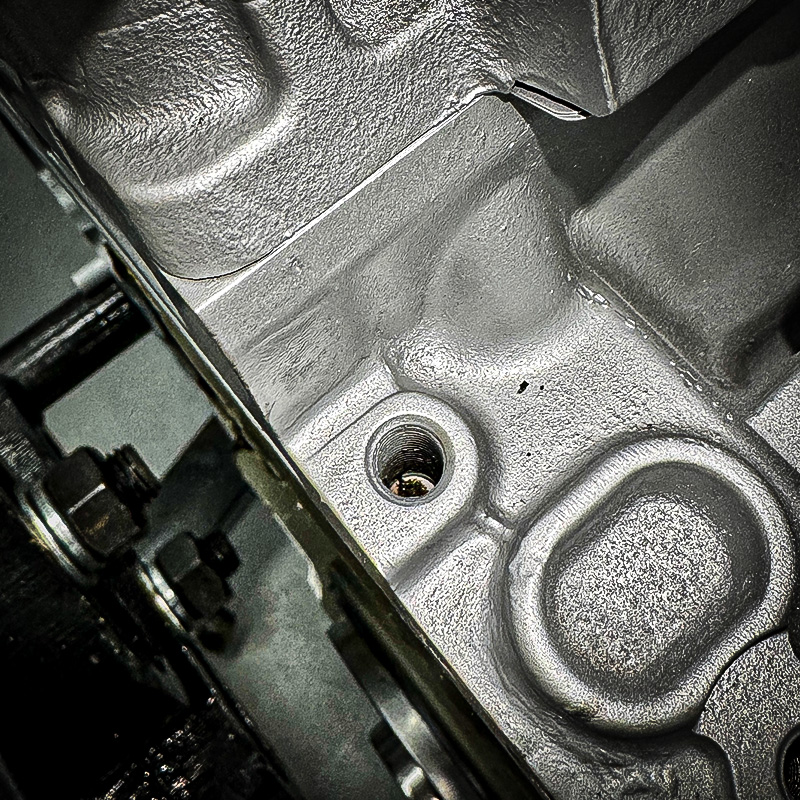
A quick look with a flashlight shows left-over engine oil that snuck its way into this head bolt hole during disassembly. Photo: Alex Lewis.

A cracked cylinder head or engine block can mean major repairs, big bills, and a whole lot of frustration. And the worst part? It’s easily preventable. Cleaning out those bolt holes isn’t just good practice—it’s essential for ensuring the bolt can get to its full depth, unimpeded, and safely reach its required torque spec, leaving everyone happy and a job well done.

Things to consider before reassembly around non-passthrough (blind) bolt holes:
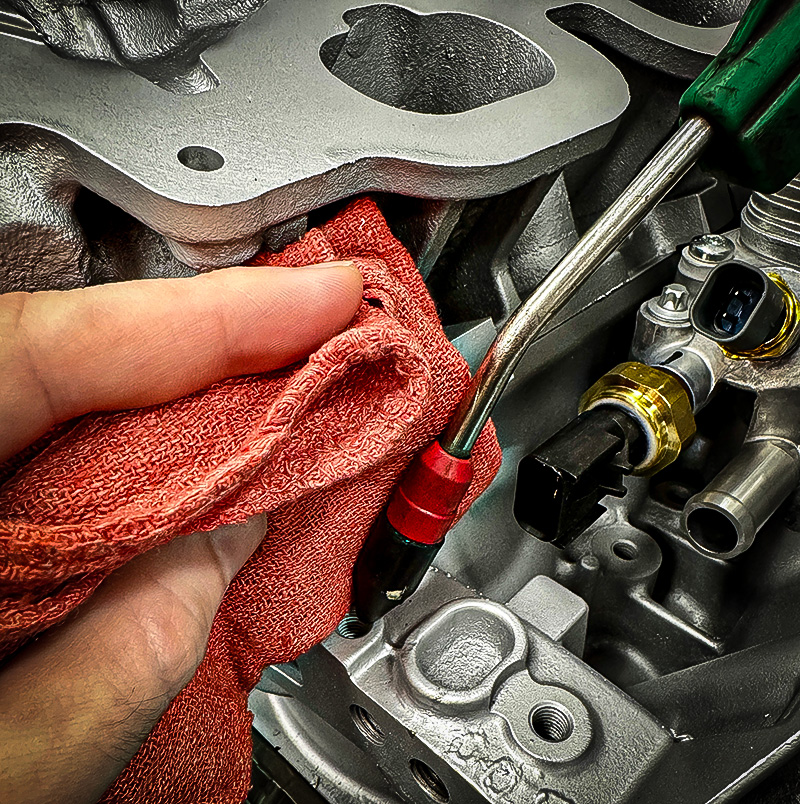
  • Inspect every bolt hole: Look for any signs of fluid or debris
  • Clean thoroughly: Use compressed air or a lint-free swab to make sure the hole is dry
  • Double-check: A quick second look can save hours of headache later
Using compressed air while covering the hole with a shop rag is a great way to blast that unwanted fluid out of there before reassembly. Photo: Alex Lewis.

And remember, if you’re working on an engine that’s had an oil or coolant leak, be especially diligent. Fluids love to hide in those deep recesses. A few minutes of cleaning can prevent catastrophic damage. It’s one of those small steps that makes a big difference.

Do you have a preferred cleaning method, or have you fallen victim to cracking an aluminum part with trapped fluid? Share your story with us!

The articles and other content contained on this site may contain links to third party websites. By clicking them, you consent to Dorman’s Website Use Agreement.
Related Articles

Shop Press Comment Policy

Participation in this forum is subject to Dorman’s Website Terms & Conditions. Please read our Comment Policy before commenting.

Subscribe
Notify of
guest
0 Comments
Newest
Oldest Most Voted
Inline feedback
View all comments